
Most safety investments get made after something goes wrong.
The harder challenge is identifying risk clearly enough to act before that happens — and doing it consistently, across every area of the facility.
Barriers, rails, bollards, and padding are all familiar tools. But the effectiveness of any safety investment depends on what happens before a product is ever selected: how the facility is walked, observed, and understood.
Experienced safety teams don’t walk facilities looking for places to “add protection.” They walk facilities to understand how people, equipment, and infrastructure interact, and where those interactions could break down under real operating conditions.
This article outlines a practical way to walk a facility and identify risk clearly, consistently, and without jumping straight to solutions.
Start With People, Not Assets
Every effective facility walk begins with the same priority: people first.
Pedestrian risk is often underestimated because:
- Near misses go unreported
- Employees adapt to unsafe conditions
- Risk feels “managed” simply because nothing serious has happened yet
When walking a facility, safety teams focus on where people are required to be — not just where equipment travels. Pay particular attention to:
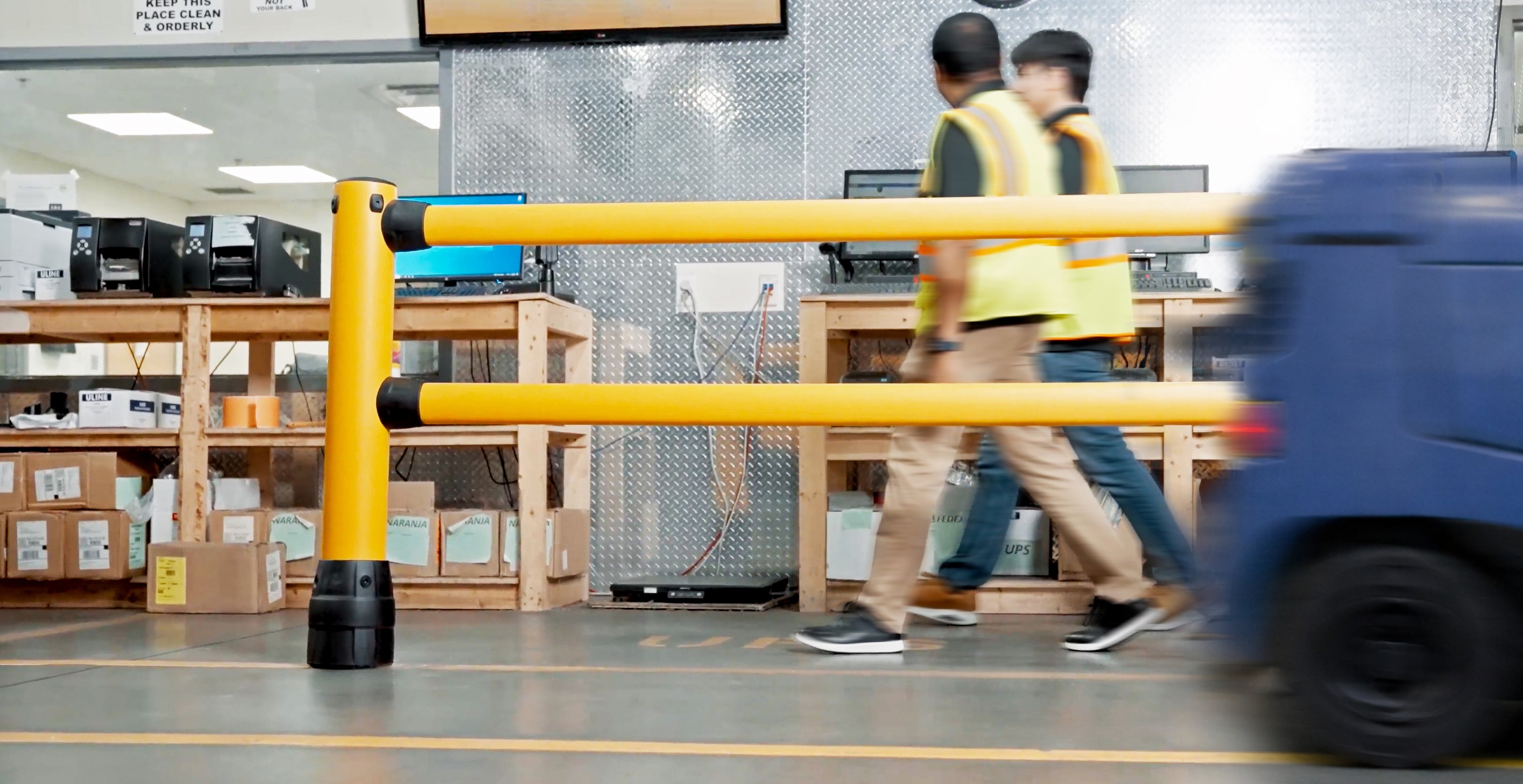
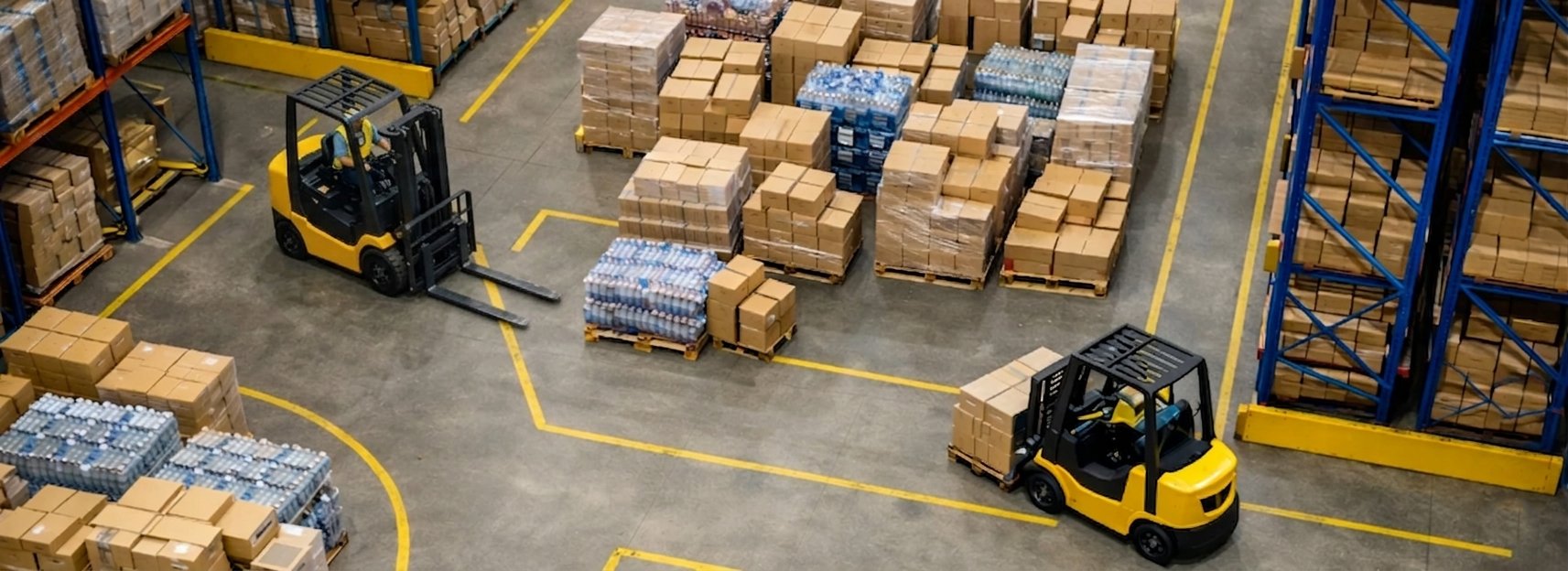
- Pedestrian walkways that intersect with vehicle routes
- Workstations located on or near active travel aisles
- Pick, pack, and inspection areas where people stand for long periods
- Crossings at aisle ends and intersections
- Areas where noise, lighting, or visual obstructions reduce awareness
If people and powered equipment share space, even briefly, that interaction deserves scrutiny. Areas where forklift pedestrian separation breaks down are consistently the highest-risk zones in active distribution centers. The goal isn’t to assign blame or assume unsafe behavior. It’s to recognize where exposure exists and whether it’s appropriate for the level of activity in that area.
Look at How Equipment Actually Moves
Risk is not defined by the name of a piece of equipment. It’s defined by how that equipment behaves in the space.
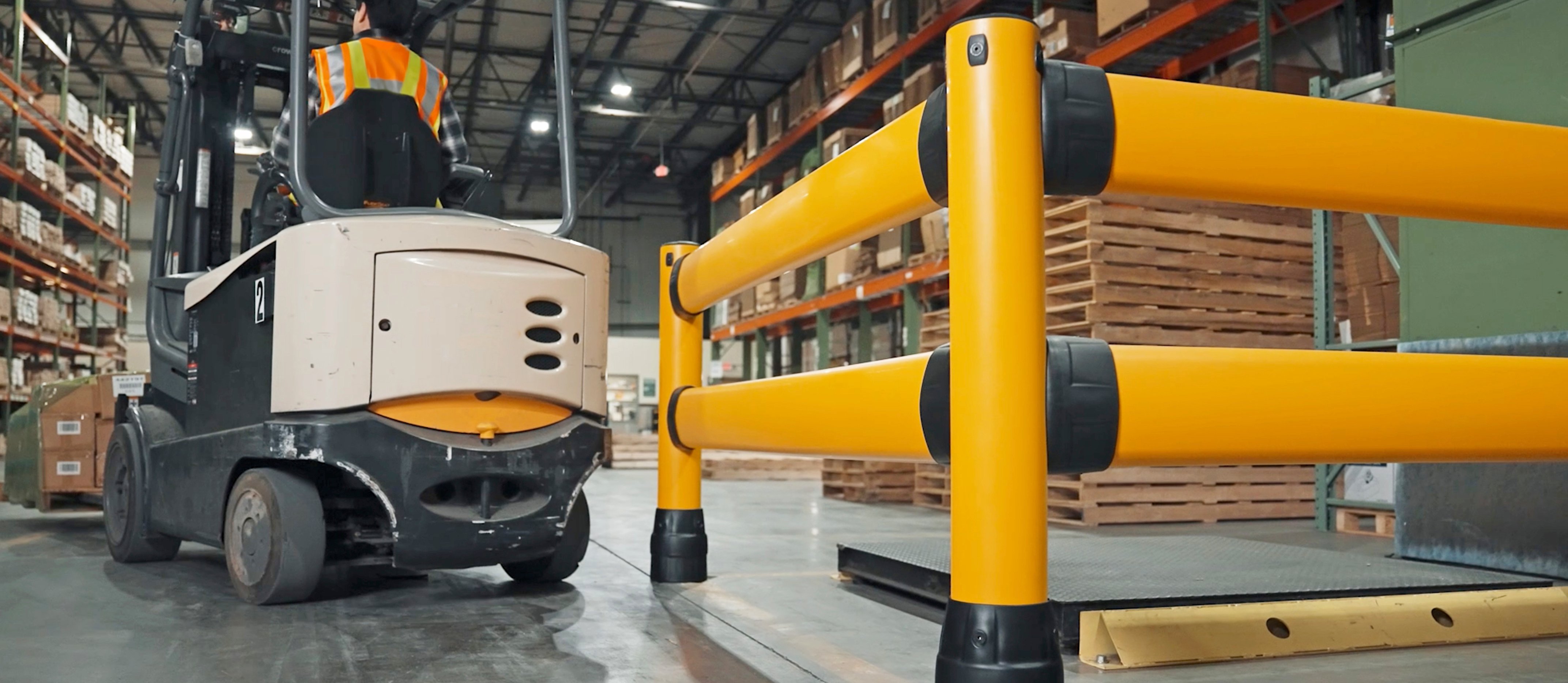
A pallet jack moving slowly in a pick zone presents a very different risk than a fully loaded forklift traveling at speed in a main aisle. During a distribution center safety walk, observe equipment in motion rather than relying on assumptions.
Key things to watch for:
- Where equipment accelerates
- Where it decelerates or stops abruptly
- Where operators turn sharply or reverse
- Where visibility is limited by loads, racking, or building features
- Where traffic density increases during peak periods
These observations help distinguish between low-energy contact risk and high-energy impact risk, a distinction that becomes critical later when considering how areas should be protected.
Identify Infrastructure That Can’t Afford to Be Hit
Some of the most disruptive incidents don’t involve injuries, at least not initially. They involve damage to infrastructure that operations depend on.
During a walk, experienced teams look closely at:
- Doorways and door tracks
- Racking uprights and rack ends
- Building columns and structural supports
- Electrical panels, controls, and charging areas
- Conveyors, automation, and mezzanine supports
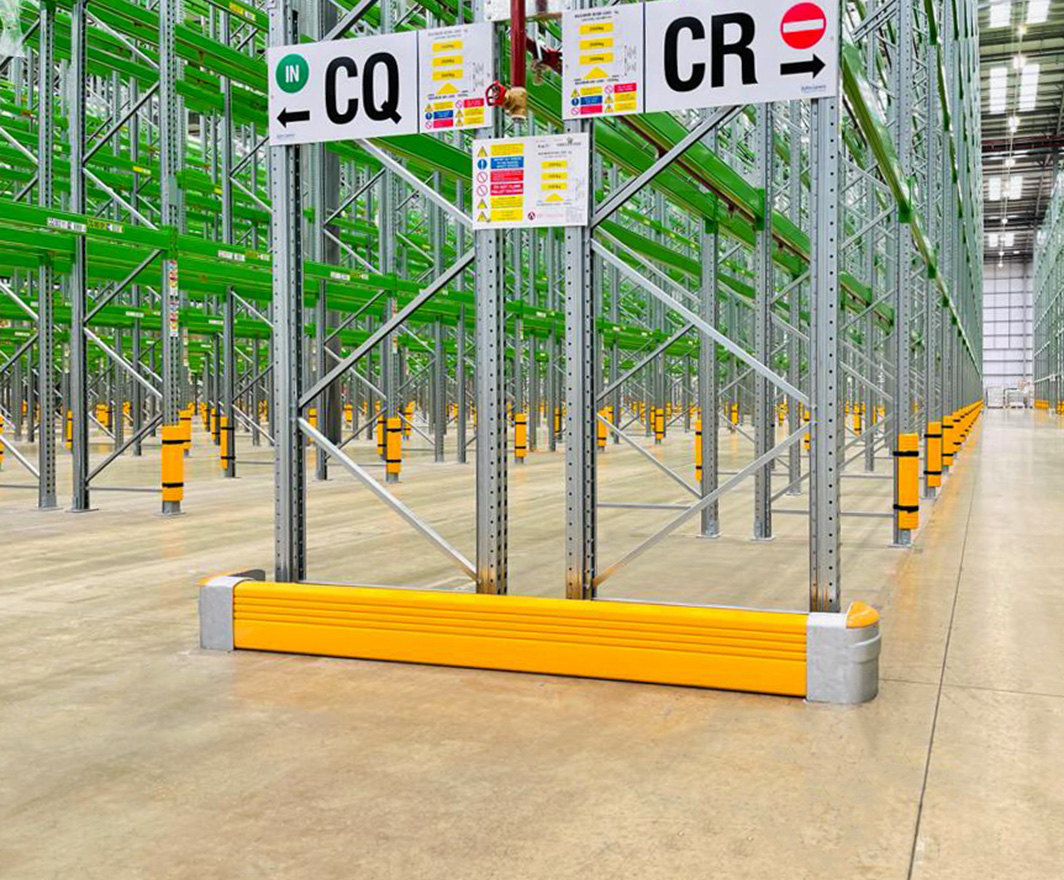
Scrape marks, bent steel, patched concrete, or repeated repairs are often early indicators that an area is absorbing impact energy, whether it was designed to or not. Column guards and rack end protection are among the most frequently under-specified solutions in facilities where this kind of impact evidence is already visible.
These signs don’t necessarily mean something has gone wrong. They signal where the facility may be asking building components or equipment to do a job they weren’t intended to do.

Watch Traffic Patterns, Not Just Layouts
Facilities evolve. Over time, routes change, staging areas shift, and temporary fixes become permanent.
That’s why effective facility walks focus less on floor plans and more on actual behavior:
- Where do operators naturally cut corners?
- Where do pallets accumulate during busy periods?
- Where do temporary routes become part of daily operations?
- Where does congestion appear during shift changes or peak demand?
These patterns aren’t failures. They’re valuable information. They show where physical protection may need to evolve alongside the way the facility actually operates today.
Separate Risk Identification From Solution Selection
One of the most common mistakes in distribution center safety is moving too quickly from observation to product choice.
Strong safety teams separate the process into two steps:
- Identify and prioritize risk
- Select protection that matches that risk
Keeping these steps distinct helps avoid over-protecting low-risk areas, under-protecting high-risk zones, or applying the same solution everywhere for the sake of simplicity.
When risk is clearly understood first, protection decisions become more targeted, more defensible, and more cost-effective.
Make the Walk Repeatable
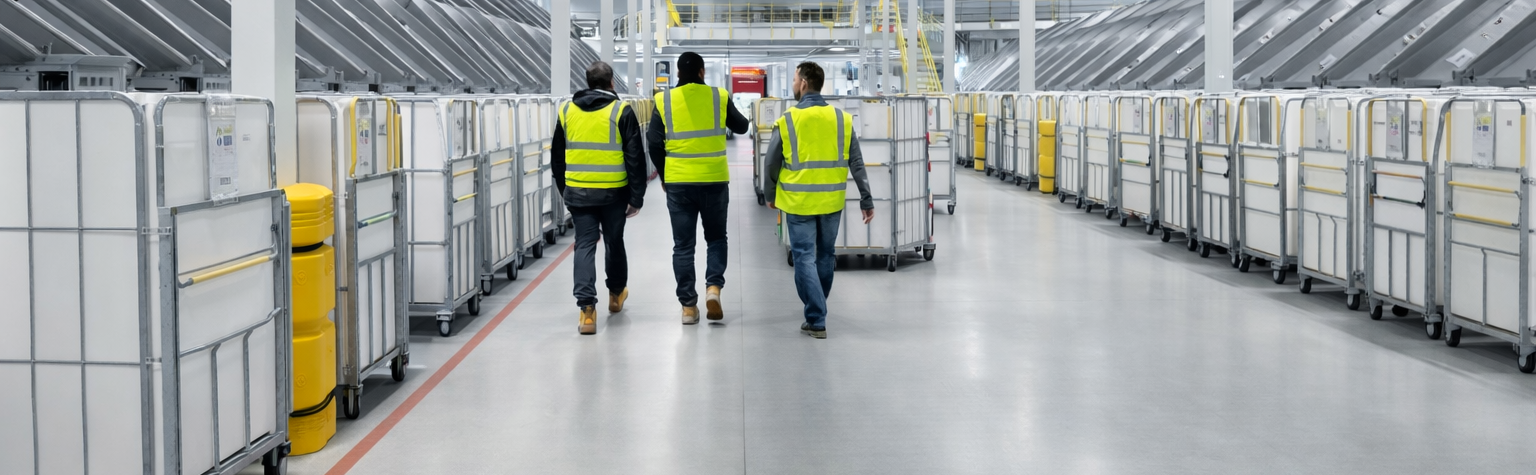
The most effective distribution center safety walks aren’t one-time events. They’re repeatable, documented, and revisited as operations change.
Having a consistent way to identify risk helps safety teams:
- Prioritize improvements
- Compare conditions across sites
- Support decisions with observable facts
- Align protection strategies with real operating conditions
To support that process, we've created a Facility Risk Walk Checklist designed to help teams capture what matters during a site walk — focusing on what's exposed, how it's exposed, and why it matters. It's built specifically for distribution center safety teams who need a repeatable way to assess where safety barriers, column protection, and pedestrian separation measures are working — and where they aren't.
Frequently Asked Questions
What should I focus on during a distribution center safety walk?
Prioritize four areas: where people and powered equipment share space, which infrastructure absorbs repeated impact without being designed for it, how traffic patterns have evolved beyond the original layout, and how equipment behaves at speed and under load — not just what it's rated for on paper.
How is a distribution center safety walk different from a formal safety audit?
A safety audit is typically compliance-driven and documentation-focused. A safety walk is observational — it's about watching the facility operate in real conditions and identifying exposure points before they become incidents. Both have a place, but a walk gives you ground-level operational context that audit checklists often miss.
How often should a distribution center safety walk be conducted?
At minimum, annually — but more meaningfully, whenever operations change. New equipment, seasonal volume increases, layout shifts, or changes to staffing patterns can all alter where risk lives in a facility. A walk should follow any significant operational change, not just the calendar.
What types of safety barriers are most commonly needed in distribution centers?
The most common needs are forklift pedestrian barriers at aisle intersections and pick zones, column guards on structural supports in high-traffic aisles, and rack end protection at pallet rack ends exposed to equipment travel. The right combination depends on traffic density, equipment speed, and how pedestrian and vehicle paths interact in that specific facility.
What are the most common high-risk areas in a warehouse or distribution center?
Aisle intersections, dock doors, rack ends, and any area where pedestrian paths cross active forklift routes. Column bases and rack uprights in high-traffic aisles also tend to show repeated impact damage that's often accepted as normal wear rather than recognized as a risk signal.
The Facility Risk Walk Checklist is built for distribution center safety teams who need a repeatable way to assess where protection is working — and where it isn't.