
Across thousands of site walks and facility assessments in distribution centers, manufacturing plants, and industrial environments, one thing becomes clear: the most advanced operations do not treat physical protection as a reaction to incidents. They treat it as infrastructure.
These facilities are not always the newest. They are not always the largest. What separates them is not budget. It is clarity. They are deliberate about how people, equipment, and infrastructure interact, and they design around predictable exposure.
Below are patterns that consistently show up in mature industrial operations.
1. People Protection Is Designed, Not Improvised
In advanced facilities, pedestrian exposure is not managed by paint and signage alone.
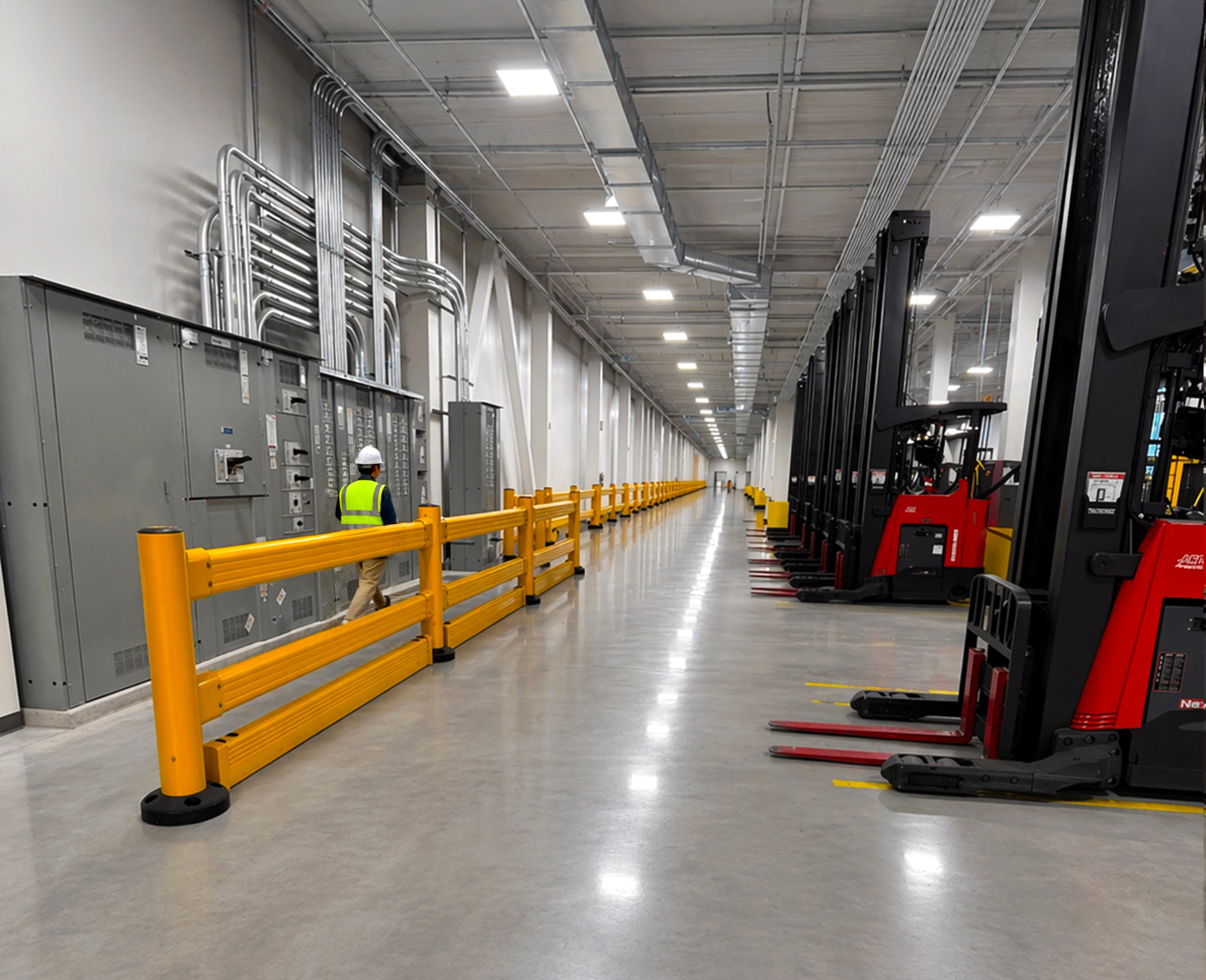
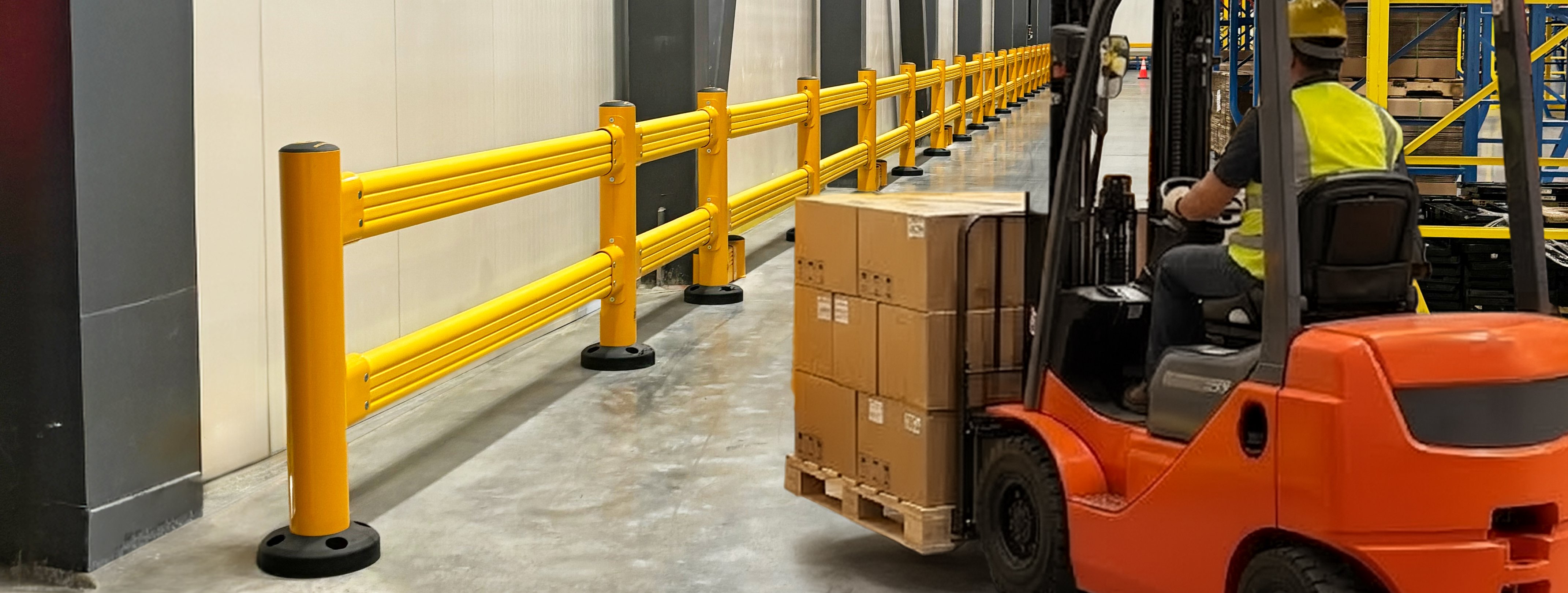
Walkways are physically separated where risk is predictable. Fixed workstations are not left exposed to active travel aisles. Intersections are protected intentionally, not simply marked.
Training and procedures matter. But experienced teams understand that behavior alone is not a reliable control when people and equipment interact every day. They assume interaction will occur and design accordingly.
2. Risk Is Tiered Based on Activity
Less mature facilities often apply the same type of protection everywhere for simplicity.
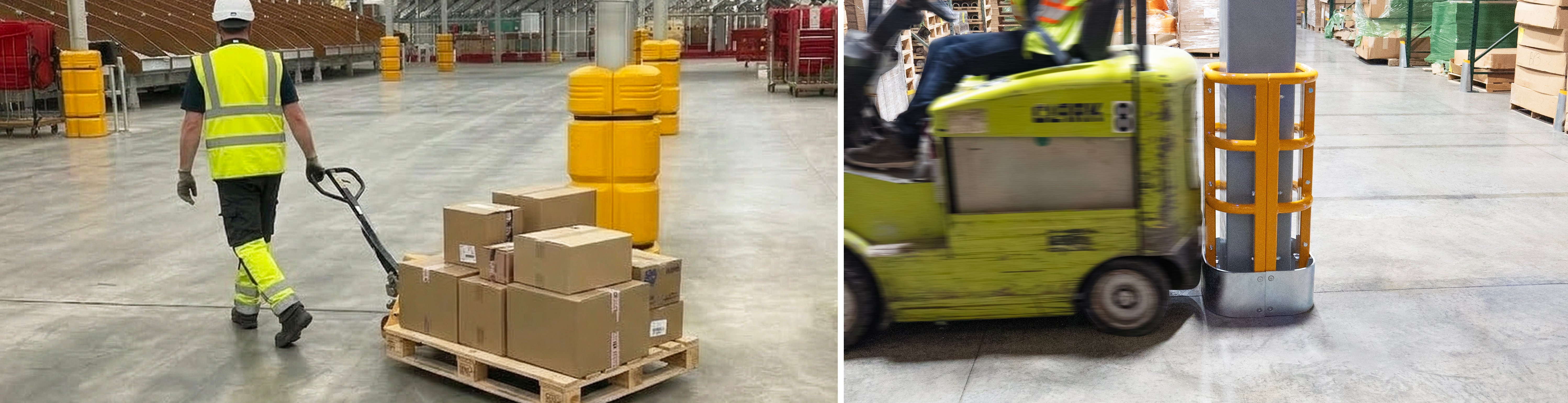
More advanced operations tier risk based on what is actually happening in each area. High-speed travel zones are treated differently than tight turning areas. Heavily loaded forklift traffic is not managed the same way as pallet jack movement. Critical infrastructure receives protection appropriate to its exposure.
This approach avoids both under-protection and unnecessary overspending. Protection is proportional to risk.
3. Equipment Energy Drives Protection Decisions
Sophisticated operations think in terms of energy, not just equipment type.
They consider:
- operating speed
- loaded weight
- frequency of travel
- stopping distance
- congestion and visibility
A fully loaded counterbalance forklift presents a different exposure profile than a reach truck operating in a controlled aisle. Advanced facilities reflect that difference in how they protect people and infrastructure.
4. Damage Is Treated as Data
In high-performing industrial environments, contact events are not dismissed as isolated mistakes.
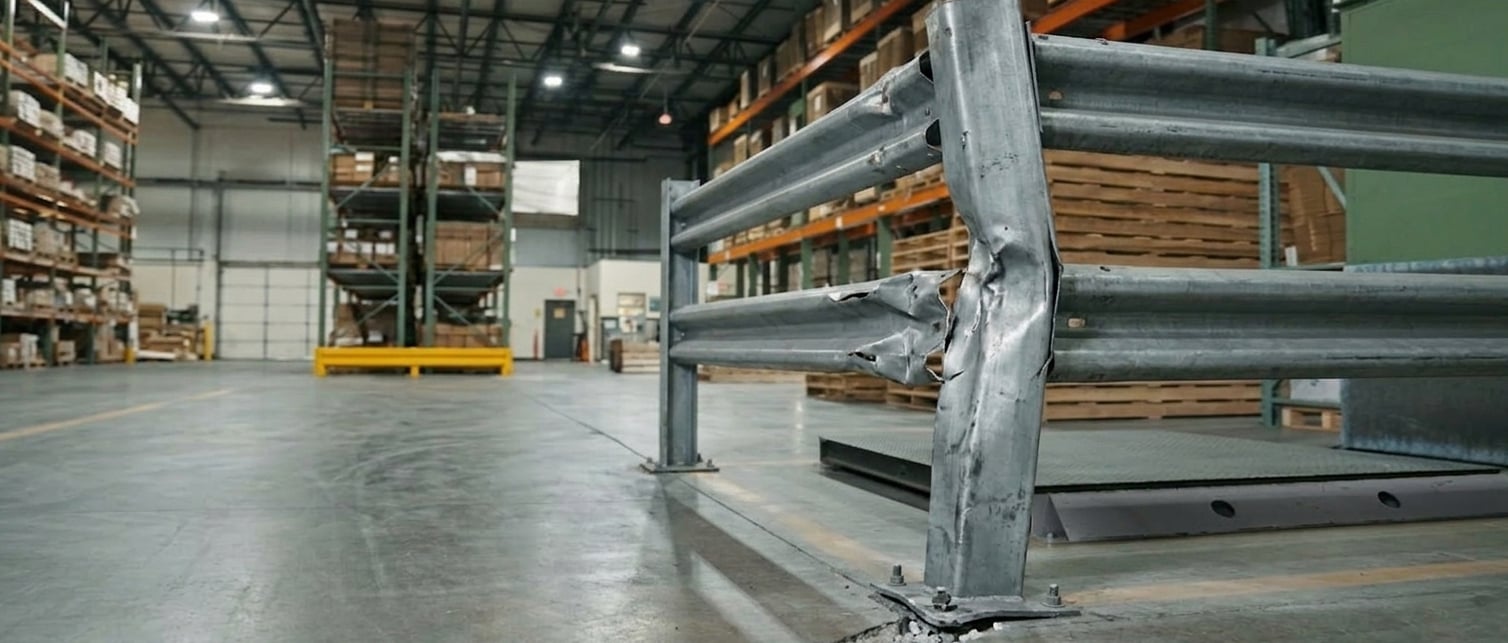
Repeated rack damage, scraped columns, or near misses at intersections are viewed as signals. They trigger conversation about layout, traffic patterns, and protection strategy.
The question is not “Who caused this?”
It is “What is this telling us about exposure?”
That shift in thinking changes how facilities evolve over time.
5. Standards Exist Across Sites and Shifts
Organizations that manage impact risk well tend to develop internal standards.
Protection decisions are documented. Logic is applied consistently. Expectations do not vary dramatically from site to site or shift to shift.
This consistency becomes especially important as operations scale. It creates predictability for employees and stability for the business.
6. Physical Protection Is Framed as Operational Discipline
In advanced operations, physical protection is not categorized as optional safety spend.
It is understood as:
- protection of people
- protection of uptime
- protection of equipment and infrastructure
- protection of operational continuity
The mindset is subtle but important. Protection is part of how the facility is designed to function, not something added after damage occurs.
What These Patterns Suggest
The most advanced industrial operations do not eliminate interaction between people and equipment. That is rarely realistic.
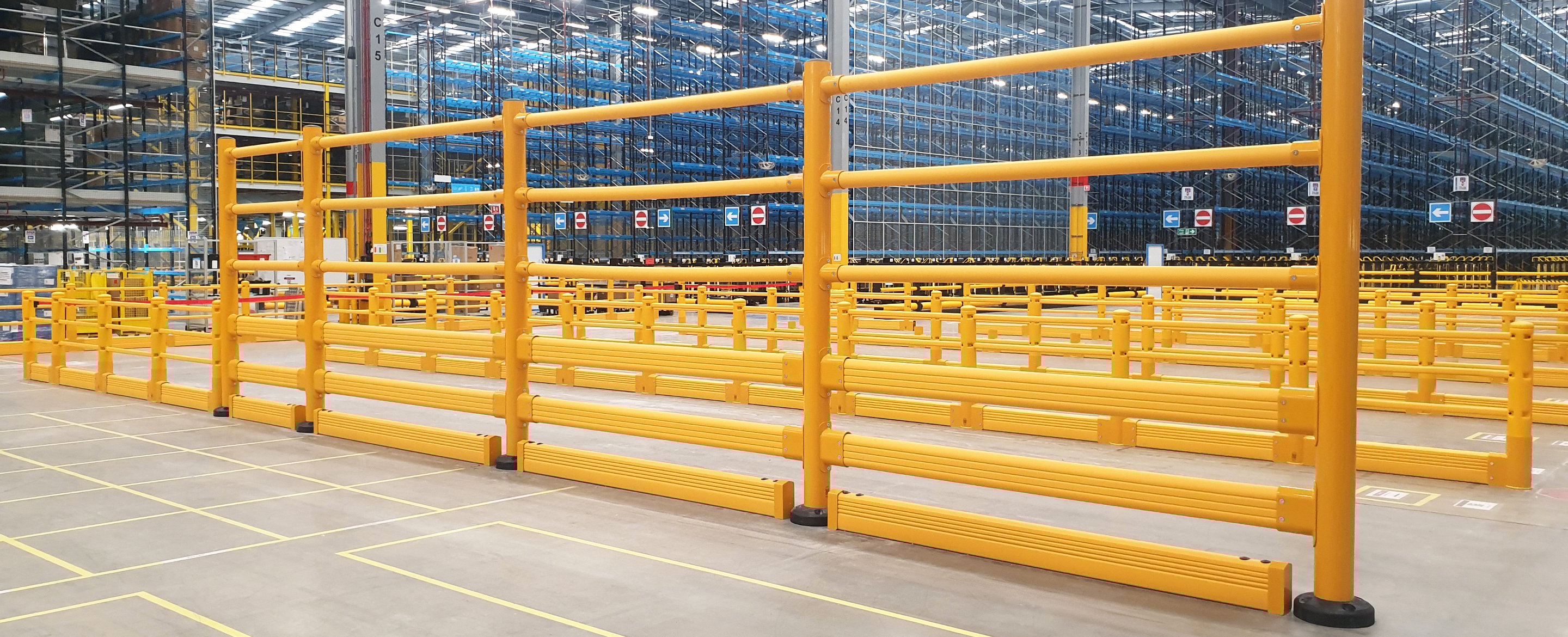
Instead, they acknowledge that exposure is predictable. They design for it. They match protection to risk. They treat damage and near misses as information. And they apply standards consistently.
The difference is not reaction. It is intention.
Across industries, the facilities that operate this way tend to see fewer surprises, fewer reactive repairs, and fewer escalations from minor contact to serious consequences.
That consistency is not accidental. It is built.
To put these principles into practice, we built a framework that walks through each one in detail — with real facility examples and a structured approach to matching protection to exposure. It is the same framework our team uses on site walks. Download the free ebook using the form below.