
Near misses are often treated as neutral events.
No one was hurt. Operations continued. Nothing appears to be broken.
But in industrial facilities, near misses involving people and equipment are rarely insignificant. They are early indicators of exposure, and when they are overlooked, the consequences tend to surface later in more disruptive ways.
This article looks at near misses through a people-first lens. Not as failures, but as signals that help safety and operations teams understand where risk exists, how it shows up in daily work, and what it can cost when left unaddressed.

Near Misses Are About Exposure, Not Luck
In most facilities, near misses happen far more often than recorded incidents.
- A pedestrian steps back just in time.
- A workstation is narrowly missed during a turn.
- A piece of equipment clips past infrastructure without contact.
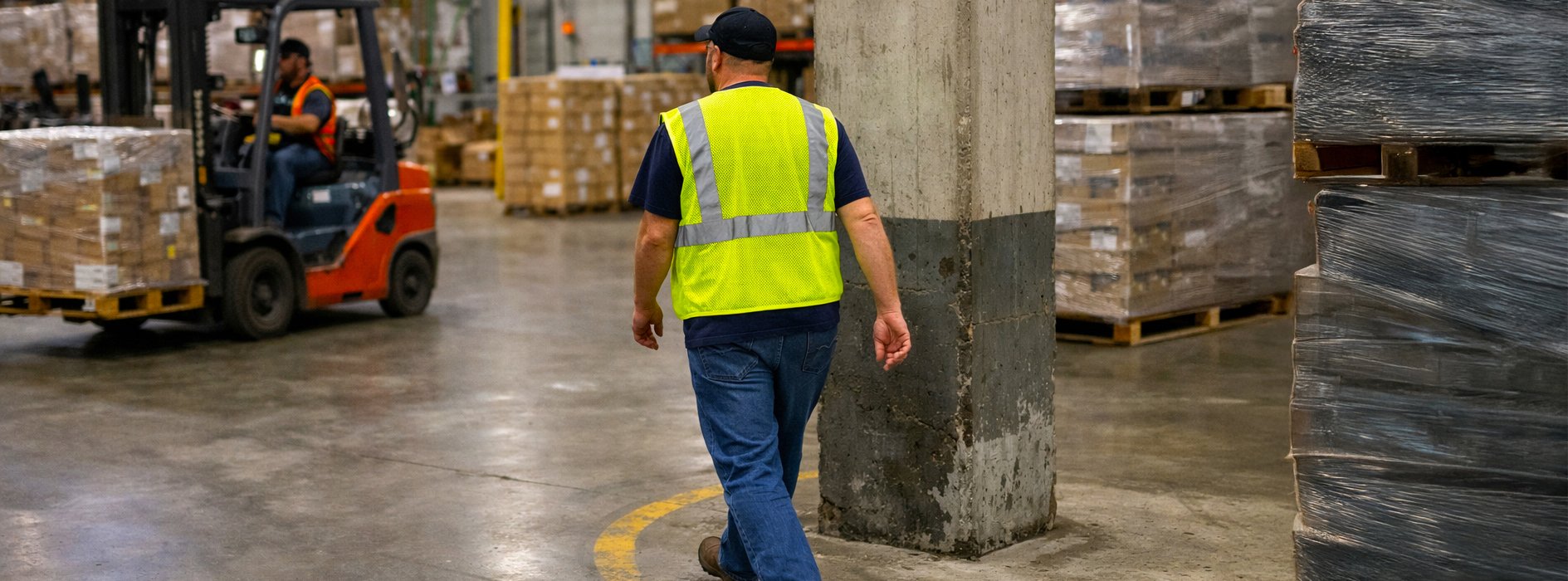
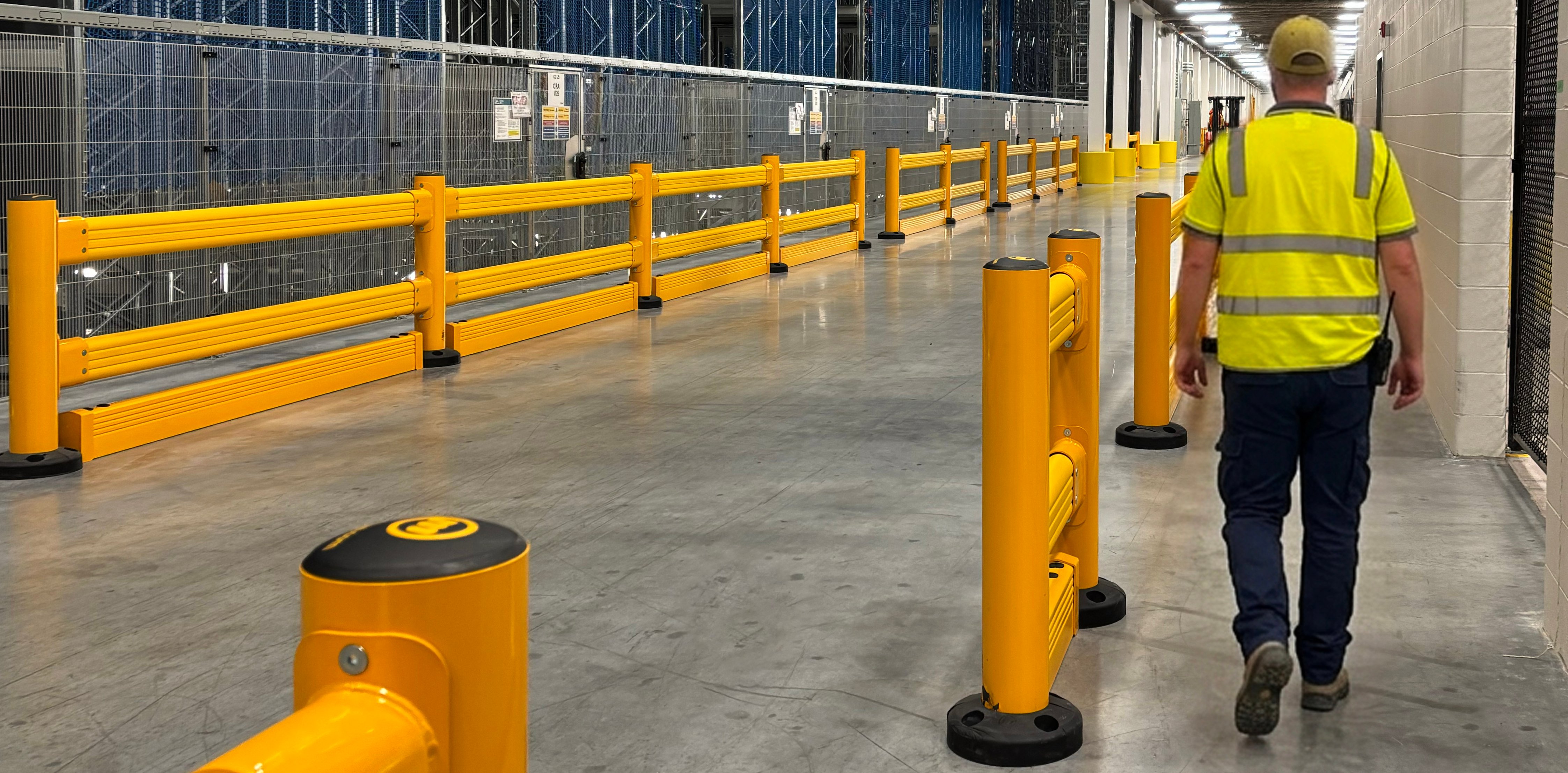
In many cases, the only thing separating pedestrian traffic from equipment movement is habit — not forklift pedestrian separation barriers or physical infrastructure. Because no injury occurs, these moments are often dismissed as close calls or part of normal operations.
What they actually represent is exposure. Near misses show where people are required to work or move in close proximity to equipment under real operating conditions. They are not about whether someone got lucky in that moment. They are about how often people are placed in situations where luck plays a role at all.
When near misses repeat in the same areas, they are telling you something about how the facility is functioning.
People Adapt to Risk Long Before It Is Addressed
One reason near misses fade into the background is that people adapt quickly.
- Operators learn where to slow down.
- Pedestrians learn when to pause or reroute themselves.
- Informal habits develop to compensate for tight spaces or limited visibility.
These adaptations help work continue, but they also mask risk. Over time, they become normalized, even though the underlying exposure has not changed.
From a safety perspective, this is where the hidden cost begins. When people adjust their behavior to manage risk on their own, it becomes harder to see where the environment itself is asking too much of them.
When Exposure Escalates, the Impact Goes Beyond Damage
When near misses eventually turn into contact, people are affected first.
Even minor injuries disrupt teams, change behavior, and alter how work is approached in that area. The human impact is immediate, and it often lingers long after the incident itself.
Operational and financial consequences usually follow:
- Unplanned downtime
- Reactive repairs
- Temporary workarounds
- Increased maintenance in high-contact areas
- Audit or compliance scrutiny
These costs are easier to measure, but they are not the root of the problem. They are the result of exposure that existed long before contact occurred.
Why Near Misses Are Easy to Discount
Near misses are difficult to quantify.
They do not show up on injury logs. They do not trigger insurance claims. They rarely create urgency unless something breaks or someone is hurt.
Because of that, many facilities wait for clearer justification before making changes. By the time an incident forces action, people have often been exposed for a long time.
Facilities that take a more proactive approach treat near misses differently. They see them as inputs for better decision-making, not inconveniences to work around.
A More Useful Way to Think About Cost
Instead of asking whether a near miss caused damage, experienced teams focus on exposure and consequence.
They ask questions like:
- Who is exposed in this area?
- How often does equipment move through it?
- What happens to people if contact escalates?
- What would change operationally if someone were injured here?
This framing keeps people at the center of the conversation while still acknowledging the operational and financial impact that follows.
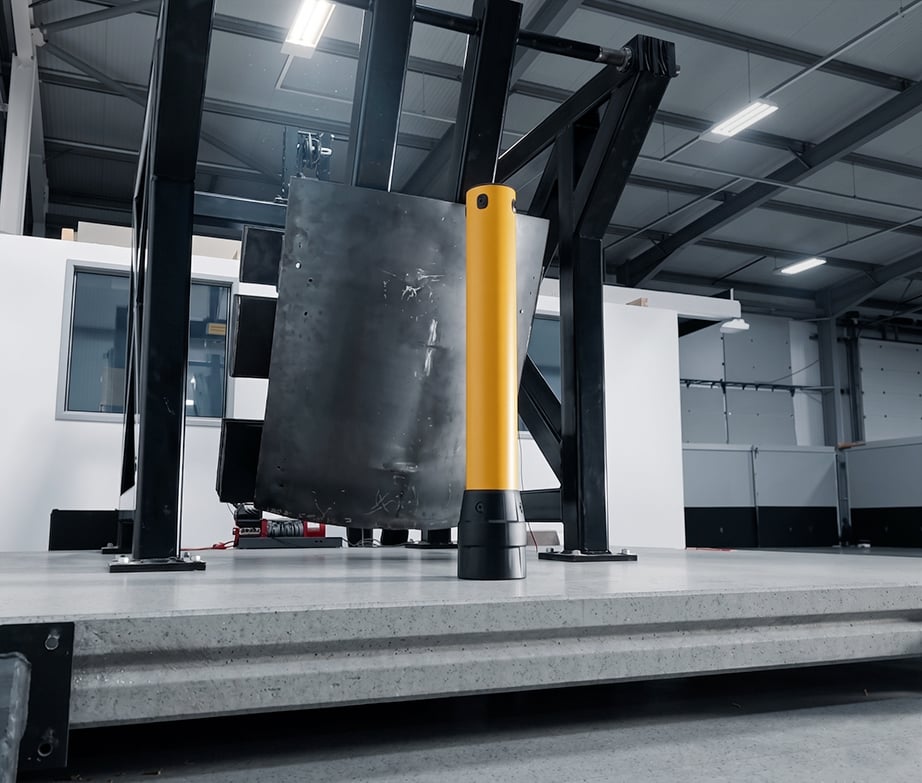
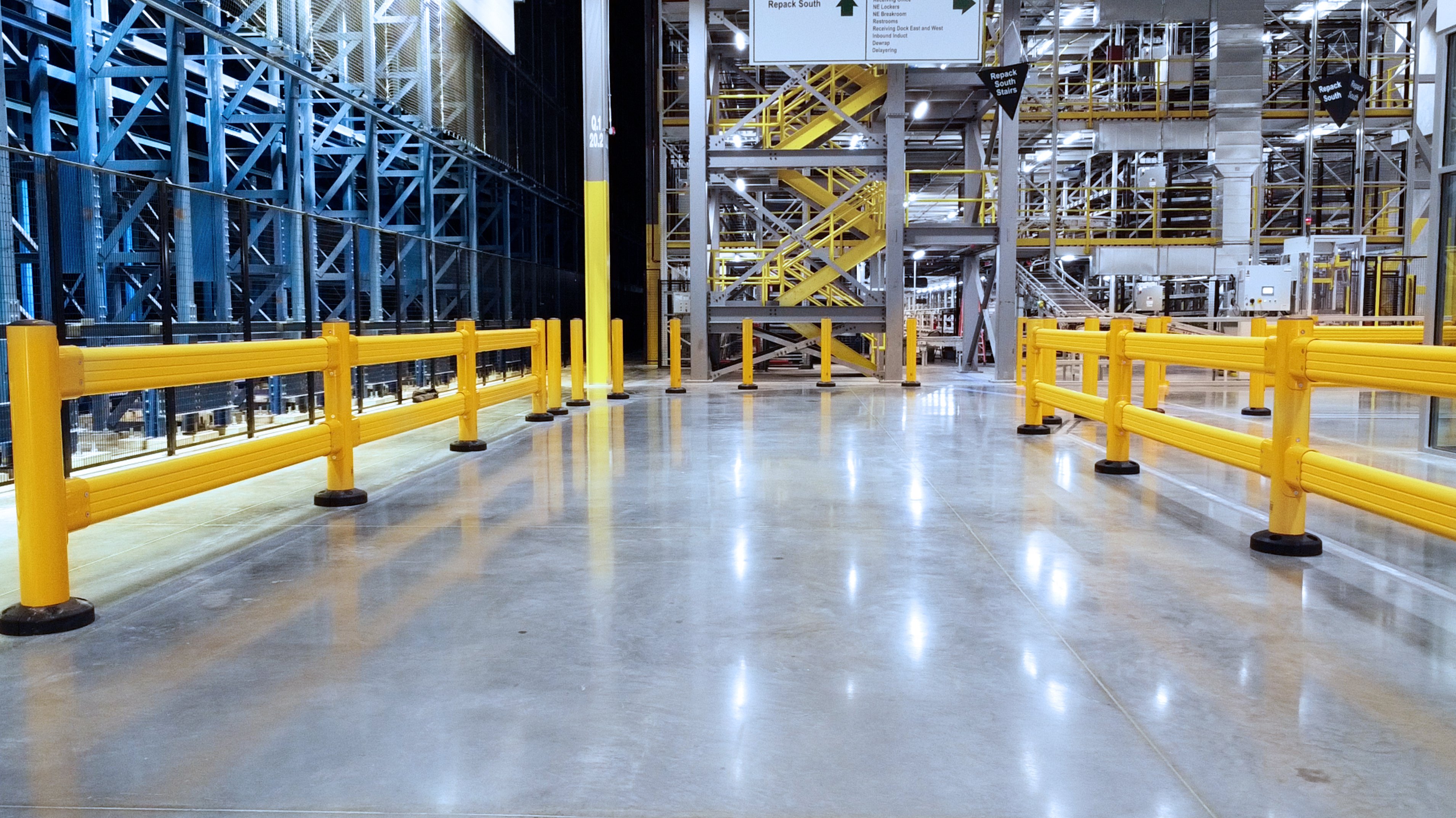
Physical protection — warehouse guardrail systems and pedestrian barriers — fits into this discussion not as a blanket solution, but as a way to control where impact energy goes and reduce reliance on individual behavior to manage risk. For safety teams at distribution centers, safety barriers for distribution centers are often the most direct way to reduce that reliance.
Turning Near Misses Into Better Decisions
Near misses do not have to be warnings. They can be signals.
When they are documented and evaluated consistently, near misses help teams:
- Identify where people are exposed
- Prioritize high-risk areas
- Align safety and operations around real conditions
- Justify changes before incidents occur
The goal is not to eliminate every interaction between people and equipment. It is to understand where exposure exists and decide, deliberately, how much risk is acceptable and how it should be managed.
Those changes often include physical controls — guardrail systems and pedestrian barriers — that remove the exposure regardless of behavior.
To support that process, we created an ROI analysis of Physical Safety Barrier Worksheet designed to help teams think through the real cost of leaving impact risk unaddressed, including both people-focused and operational considerations.
These tools provide a structured way to evaluate:
- The likelihood of contact in a given area
- Who or what is exposed
- The realistic consequence if contact escalates
- How those costs accumulate over time
Near misses are already telling you where the exposure is. This gives you a way to act on it before something else does.